Fun science games for year 2
1st grade science is structured noticing: light and sound, what plants and animals need, patterns in the sky. The skill being built isn't facts — it's observing, describing, and asking testable questions.
Each plant part has a distinct job, and roots, stems, leaves, flowers, and seeds work with sunlight, water, and air to help the whole plant live, grow, and begin a new generation.
Weather WatchScience · Ages 4-9Weather clues such as clouds, temperature, wind, and repeating observations help us describe current conditions, prepare sensibly, and make simple forecasts that are predictions rather than promises.
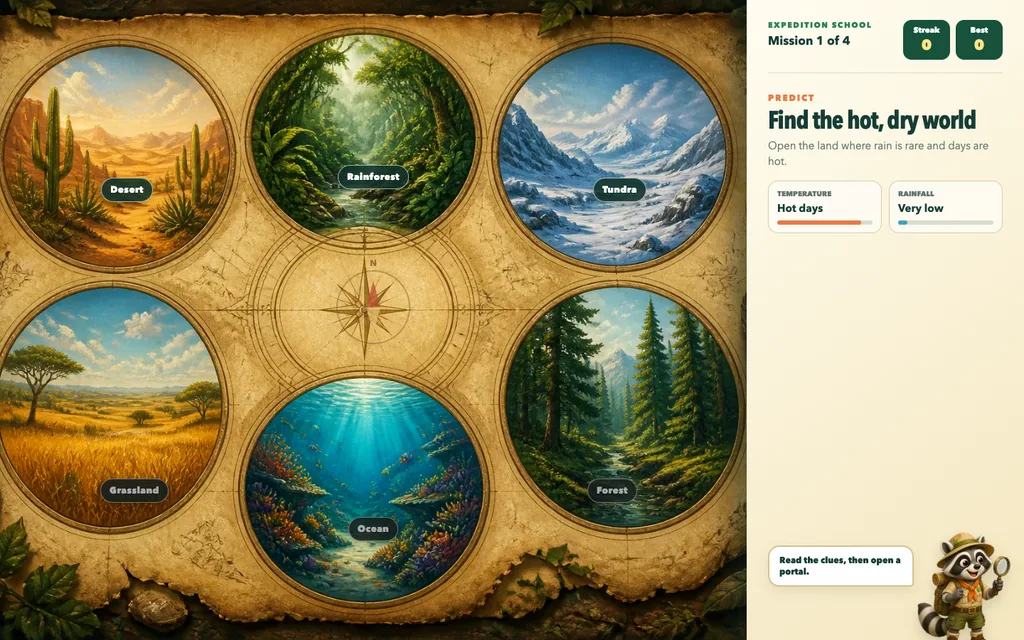 Biome ExplorerScience · Ages 7-13
A biome's long-term temperature and rainfall shape its vegetation, which determines which plants, animals, and food chains can survive there.
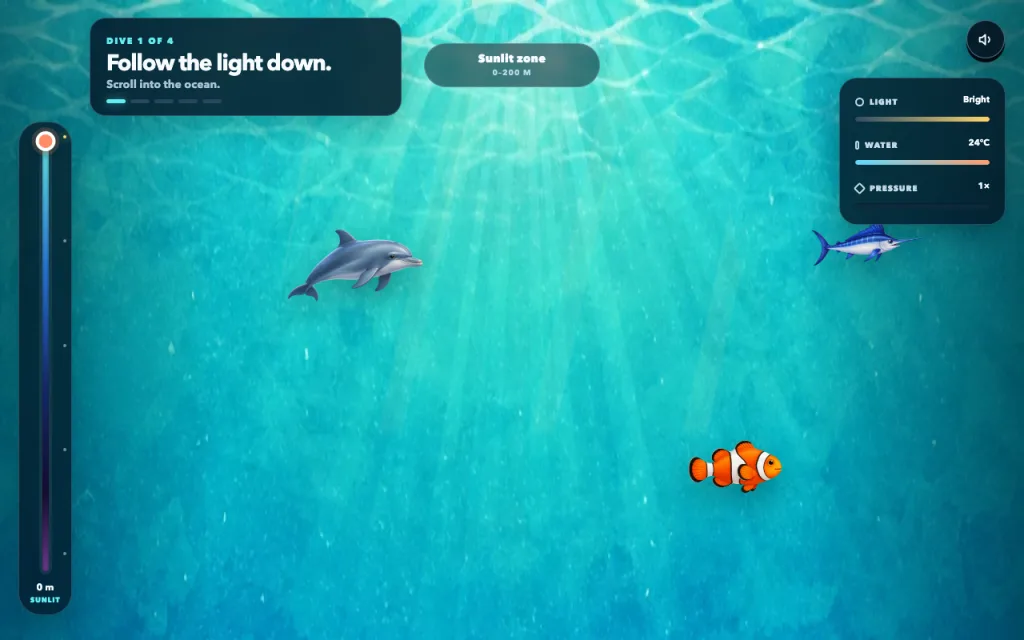 Ocean DeepLife and Earth Science · Ages 7-12
The ocean changes in zones with depth: sunlight fades, temperature falls, and pressure rises, so animals need different adaptations to live at different depths.
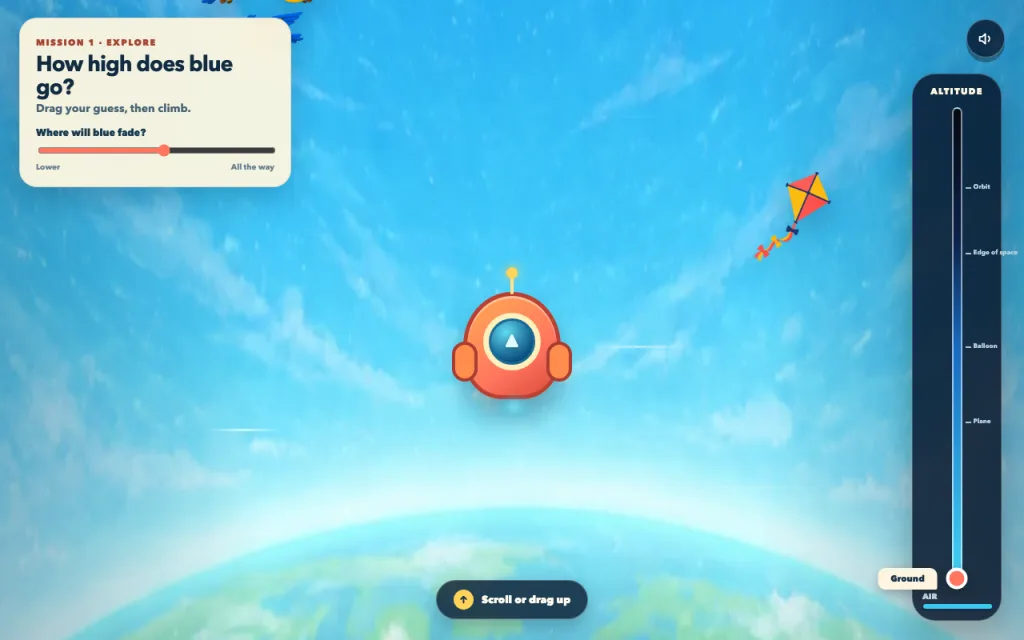 Sky HighEarth and Space Science · Ages 7-12
As altitude increases, Earth’s air gets gradually thinner: birds and airplanes need enough air, balloons rise into thin air, and satellites orbit above almost all of it.
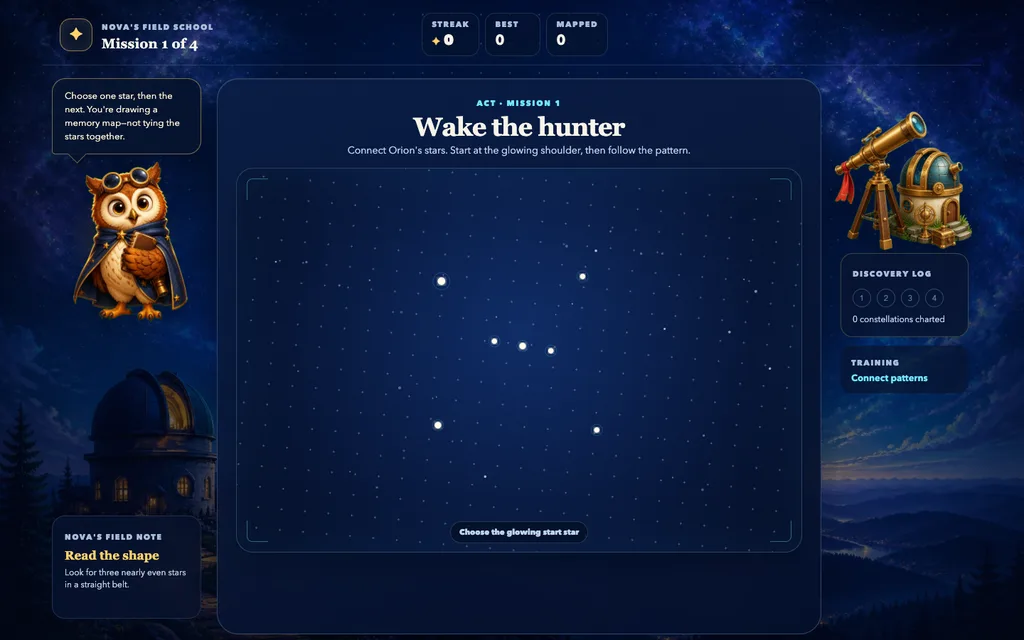 Star MapperScience · Ages 7-13
Constellations are recognizable patterns we see from Earth: their stars are real, but the connecting lines are imaginary guides, and hemisphere and season change which patterns are easiest to find.
Getting the most out of science games at this age
- Always get the prediction first — 'what do you think will happen?' turns play into an experiment.
- Wrong predictions are the good ones. Celebrate the surprise, then ask what changed their mind.
- Connect the game to the kitchen: melting butter is states of matter, a bath drain is a force, dinner is a food chain.
Common questions
What science skills should year 2 learn?
1st grade science is structured noticing: light and sound, what plants and animals need, patterns in the sky. The skill being built isn't facts — it's observing, describing, and asking testable questions.
Are these games free?
Every Ako lesson here runs in the browser, and your first one is completely free — no account, no card. A subscription unlocks the full catalog of 100+ lessons.
How are Ako lessons different from other learning games?
Ako — a voice AI tutor — is inside every game. He sees what your child does, asks for predictions before they act, and adapts his coaching to their age. Parents get a weekly note about what actually clicked.